Welcome to Jiangmen Tufeng Chemical Co., Ltd.
Oil based industrial paint
-
DB-1A Acrylic Metal Baking Paint Series
-
DB-2B Polyurethane Two-Component Paint Series
-
DB-3C Acrylic Plastic Paint Series
-
DB-4D Alkyd Antirust Paint Series
-
DB-7G Epoxy Anti-rust And Anti-corrosion Primer
-
DB-7G Epoxy Anti-Rust And Anti-Corrosion Paint Series
-
DB-7G High-temperature Anticorrosive Coating Is resistant To 300 Degrees
-
DB-8H Fluorocarbon Paint Series
-
DB-9K Rubber Paint Series
-
DB-11M High Temperature Paint Series
-
DB-12N Floor Paint Series
-
DB-16T Thermal Insulation Coating Series
-
DB-17 Polyurea Waterproof Coating Series
-
DB-18V Oil-Based Exterior Wall Paint Series
-
Polyamide Side Lacquer
-
Epoxy Cloud Iron Intermediate Paint
-
Epoxy Rich In Zinc Primer
-
Chlorinated Rubber Anti-corrosion Coating Material
-
 Highly Chlorinated Polyethylene Anti-corrosion Coating
-
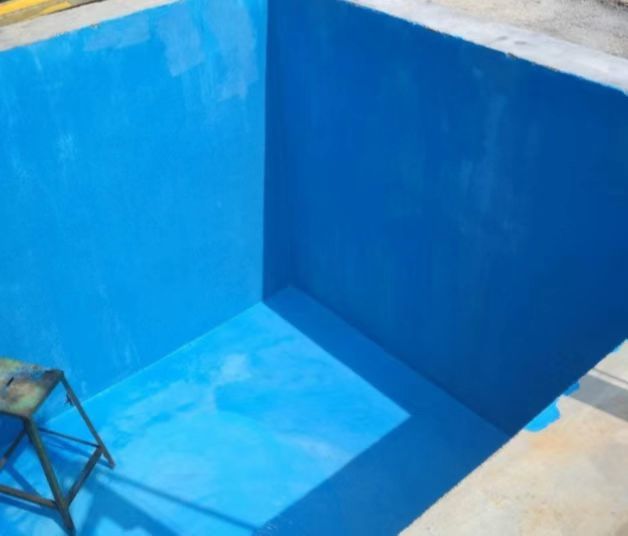 Water-resistant Coatings
I. Introduction DB-16T With the increasing depletion of Earth's energy, environmental protection and energy conservation have become the theme of this era. Under the tide of the times, scientific research and technological development regard energy saving, consumption reduction, and economic efficiency improvement as one of the main breakthrough directions, and even fire retardant coating technology is no exception. In recent years, the developed building insulation coatings—reflective insulation coatings—have achieved significant breakthroughs in energy conservation. To understand reflective insulation coatings, we need to start with their formulation. The formulation of reflective insulation coatings primarily consists of binders, heat-reflective pigments, fillers, and additives, and is a new type of fire-retardant and heat-insulating fire protection material that achieves insulation by efficiently reflecting sunlight. Among them, thin-layer insulating reflective coatings are representative of this type of coating. They are mainly used in various occasions requiring thermal insulation in the field of construction engineering, meaning high-reflectivity insulating coatings are applied to the surface of external protective structures. This can reduce the absorption of solar radiant heat by buildings, prevent the temperature rise of building surfaces caused by absorbing solar radiation, and at the same time reduce the transfer of heat indoors, thereby achieving building protection and fire resistance. II. According to the insulation mechanism of reflective insulation coatings, they can be mainly divided into three types Barrier-type Insulation Coatings: Achieve insulation by impeding heat transfer. When preparing the coating, low thermal conductivity materials are mainly selected, and low thermal conductivity air is introduced as a raw material after the coating forms a film. Common heat-blocking fillers for this type of reflective insulation coating include hollow glass microspheres, hollow ceramic powder, hollow fibers, sepiolite, vermiculite, perlite, etc. Heat-Reflective Insulation Coatings: Mainly achieve insulation by reflecting the spectral energy of sunlight within the 400~1800nm range. Its reflective materials use nanomaterials. Radiant Barrier Coatings: Mainly achieve insulation by emitting absorbed sunlight and heat into the air at specific wavelengths. Its formulation materials are various metal oxides, such as iron oxide, manganese dioxide, cobalt oxide, copper oxide, and other reflective spinel dopants. The above three are just the most basic classifications. In many cases, we can also compound reflective insulation coatings with the aforementioned functions to form multi-functional insulation coatings, such as those with both barrier and reflective properties. This is also the future development trend of reflective insulation coatings. What's more valuable is that reflective insulation coatings have both decorative and insulating functions, belonging to functional coatings. Therefore, this type of coating has been widely applied in the field of construction engineering, mainly for reflective insulation of roofs and walls, and is also widely used in granaries. Moreover, the application areas and usage scenarios of reflective insulation coatings are continuously expanding. With the infinitely increasing demand for building energy efficiency in the future, the attention they receive will inevitably show geometric growth! Due to their superior performance, reflective insulation coatings caused a strong market reaction upon their introduction. Even the state correspondingly issued standards for reflective insulation coatings (JC/T1040-2007) requiring: solar reflectivity no less than 85%, and hemispherical emissivity no less than 83%. This is to regulate the reflective insulation coating market. III. Construction Ratio Paint: Thinner (1:0.3-0.5) IV. Storage 1. Paint and thinner should be sealed and stored in a cool place, fire-proof, leak-proof, sun-proof, high-temperature resistant, and away from fire sources. 2. The storage period of the coating is one year or more. 3. After opening the can, the coating should be thoroughly stirred evenly to prevent pigment sedimentation causing color difference. 4. If the workpiece surface has attachments such as dust, particles, or oil stains, it will damage the appearance, so it should be wiped clean before spraying. 5. Due to different plastic substrates, sufficient testing should be done before spraying to avoid affecting paint adhesion. 6. During construction, please take relevant labor protection measures. If skin comes into contact with the coating, it can be washed with laundry detergent and water. If you feel unwell, please seek medical help.
High-temperature anticorrosion coating, resistant to 300 degrees
DB-7G高温防腐涂料耐300度 一、 产品特点: DB-7G高温防腐涂料涂层在高温条件下(300℃)具有良好的耐热性、耐油、耐酸性和耐剥离性及耐硝酸盐应力腐蚀等优异性能,可延长高炉、热风炉的使用寿命。 二、应用范围: 广泛用于化工的高炉 、热风炉内外壁及拱顶,也可用于烟囱、烟道、高温热气管道、热交换器及其它金属表面要求高温防腐的保护。 三、性能指标: 项目 指标 检验标准 漆膜外观及颜色 黑色、灰色,漆膜平整光滑 GB9761 粘度(SC涂-4#/20℃) 30-70 GB/T1723 附着力(划格法) 0 GB9286 耐腐蚀性 5%HNO3溶液煮15天无变化 GB/T 9274-88(浸泡法) 5%H2SO4溶液煮15天无变化 5%HCl溶液煮15天无变化 柔韧性,mm ≤1 GB/T1731 耐水性(40℃)240h 无明显变化 GB/T1733 冲击强度,kg,cm ≥50 GB/T1732 耐酸性,48h 无明显变化 常温浸于0.1HN2SO4溶液中 耐热性,300℃/500h 不起泡、不脱落,轻微变色 GB/T1735 耐候性,500h 失光率≤20%,色素▲E≤3.0NBS其余无明显变化 ASTMG53 四、施工参数: 1、施工条件:环境温度5℃~35℃,相对湿度≤80%。雨、雪及雾天不宜施工。 2、底材处理:喷砂处理至Sa2.5级,表面粗糙度35~70μm。 3、施工方法:推荐采用高压无气喷涂,也可采用空气喷涂、辊涂。 4、涂料配比:按重量比A:B=5:1,充分混合搅匀。 5、参考用量:200~220g/m2(干膜厚度不小于20μm)。 6、稀 释 剂:专用稀释剂,用量不超过涂料总重量的5%。 7、前道配套漆:硅酸锌防锈涂料。 五、安全防护: 1、施工前必须对参加施工的人员及管理人员进行安全教育。 2、涂料存放、搅拌及施工时,应注意通风,要严禁吸烟、明火,必须配备灭火器具,施工现场的电气设备、照明灯具及开关应选用防爆型。 3、施工人员应穿戴防护用品,当皮肤与涂料接触时,应及时用稀释剂擦净,然后用清水洗净。清洗容器或工具可用稀释剂,但用量不可过多,并须在通风处进行。 六、包装规格: A组分20kg/桶,铁桶包装;B组分4kg/桶,铁桶包装。 七、贮存期限: 贮存在阴凉、通风、干燥处,保质期为一年。超过保质期的涂料经检验合格后方可使用。
CONTACT US
Address: Longan Industrial Zone, Duruan Town, Pengjiang District, Jiangmen City, Guangdong Province


FEEDBACK
Fill in your phone number and email information, and we will contact you in time to solve your problem as soon as possible.






Inquire Now